Price or value – what really matters when choosing a door threshold?
At first glance, a door threshold is just a detail. But it is precisely such details that can determine the durability, comfort, and operating costs of a door – for many years to come.
Is price the most important factor here? Or is there something else that matters more?
In this article, we look at this issue from three perspectives: that of a developer, a woodwork manufacturer, and an architect. We show why a “cheaper” solution does not always mean savings—and how a properly selected threshold system can increase the value of the entire investment.
Why is price not enough?
In our daily conversations with door manufacturers, contractors, and investors, we often hear one thing: “price is key.” This solution is too expensive; we need something cheaper. On the one hand, this is understandable—investment budgets are tight, schedules are tight, and expectations are growing.
Pricing decisions are based on specific priorities, which vary for each participant in the process.
Deweloper
Maximization PUM, cost optimization
For developers, investment efficiency is what counts. Every centimeter of usable floor space represents real value. In practice, this means that many design decisions are subordinated to economic indicators.
For developers, investment efficiency is what counts. Every centimeter of usable floor space represents real value. In practice, this means that many design decisions are subordinated to economic indicators.
The problem begins later—when complaints start coming in from residents:
- cold coming in from the balcony door,
- moisture near the floor,
- the need for maintenance and repairs.
The costs that were initially “saved” return in the form of reduced comfort, dissatisfied tenants, and image problems for the developer’s brand.
Manufacturer
How to sell value, not just price
Door and window manufacturers operate under pressure from competitive prices. Even if they know that a better solution will provide greater durability or reduce complaints, they have doubts as to whether the end customer will be willing to pay for it.
So, they often choose the cheaper option, which is quicker to implement, but not always the best one. They cut corners—because they have to meet the deadline, because the customer expects a lower catalog price, because they lack sales arguments.
But what if the better solution… isn’t a sales problem, but a selling point?
This is where an opportunity arises for manufacturers – not only to produce, but also to educate. To compete not only on price, but also on quality and predictability.
What if you could show your customer that:
- A tighter threshold means lower heating bills.
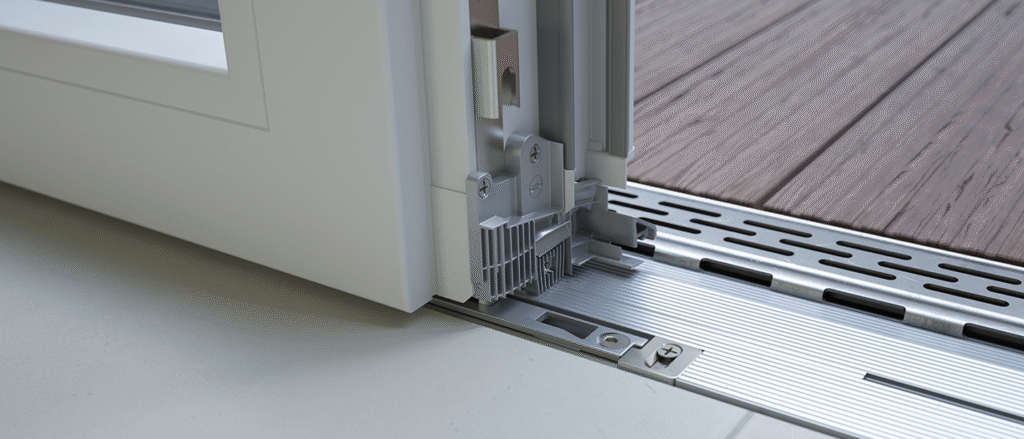
- The COMBI system reduces installation time and eliminates the risk of errors.
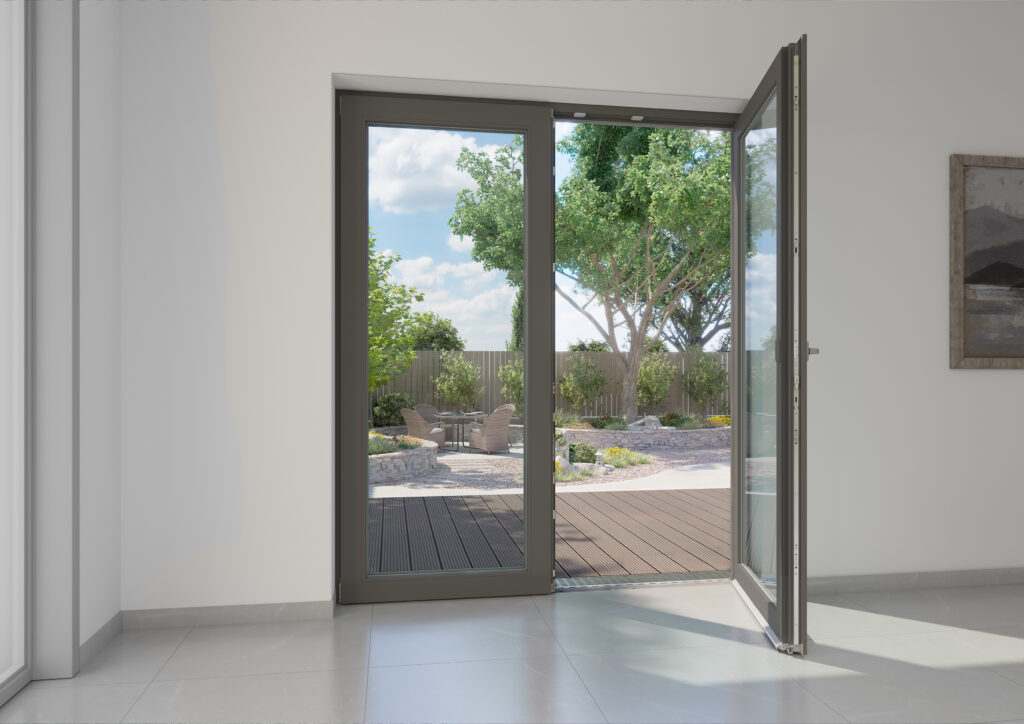
- COMBI PLAN provides a 0 mm transition, meaning comfort and accessibility without compromise?
Architect
How to simplify your design and increase its value
Today, architects have to meet a number of technical requirements – from technical conditions (WT2021) to guidelines for accessible construction. A well-designed detail, such as a threshold system with a tightness certificate and a barrier-free passage option, simplifies the design and facilitates its approval.
This is also an element that can be highlighted in the presentation of the investment – as a detail that increases the comfort of future residents.
That is why it is worth thinking not only about price, but also about value throughout the entire product life cycle.
A technically refined, easy-to-install, safe, and durable solution: it reduces risk, simplifies service, and facilitates sales. And that’s when it turns out that this “more expensive” solution is actually cheaper.
Benefits
Why is value more than just a parameter in a table?
Let’s take the example of a door threshold. It is a detail that can determine the tightness of the entire door, its durability, and comfort of use.
Choosing a low-quality component—without analyzing its impact on assembly, insulation, or repeatability—can result in:
- complaints related to freezing and moisture,
- deformations of woodwork and the need for servicing,
- problems with certifying doors in a higher energy class.
System COMBI i COMBI PLAN – detale, które pracują na całość
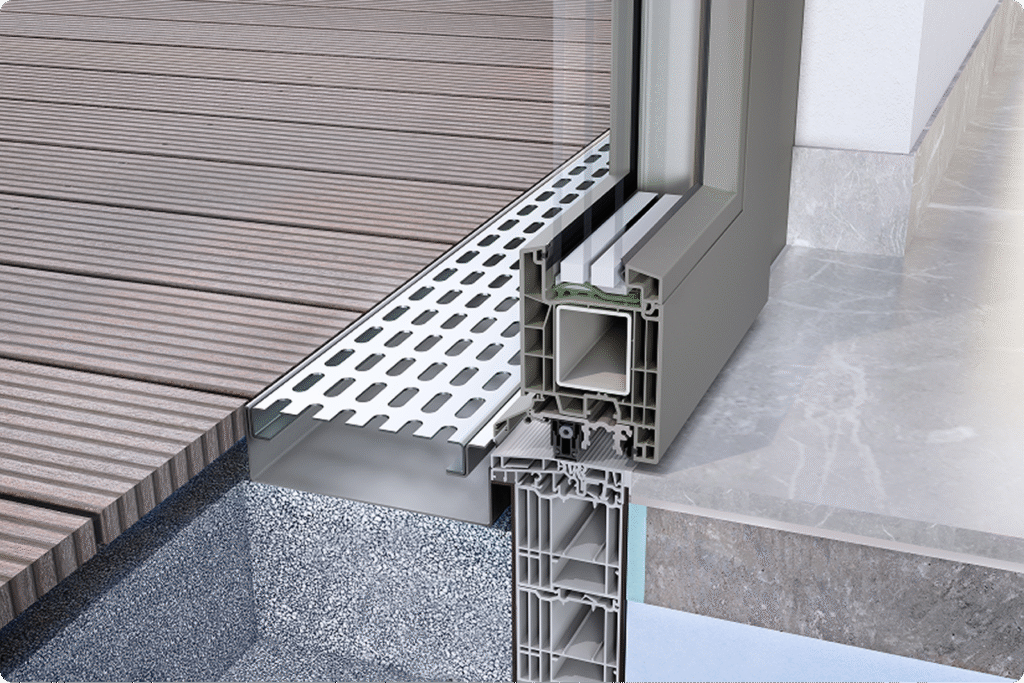
Instead of short-term savings, COMBI and COMBI PLAN offer a concrete, measurable advantage:
- They reduce installation time, which translates into real operational savings for large investments.
- They standardize the process—one threshold fits different door configurations, simplifying logistics and production.
- Confirmed tightness (class 9A, RC2, E900) eliminates the risk of complaints due to freezing.
- No thermal bridges means better thermal performance – and therefore fewer complaints from residents.
- COMBI PLAN’s accessibility is a response to the needs of modern construction: safe and accessible.
It’s not just a set of features. It’s a value that translates into fewer errors, fewer corrections, less stress—and more comfort, stability, and predictability.
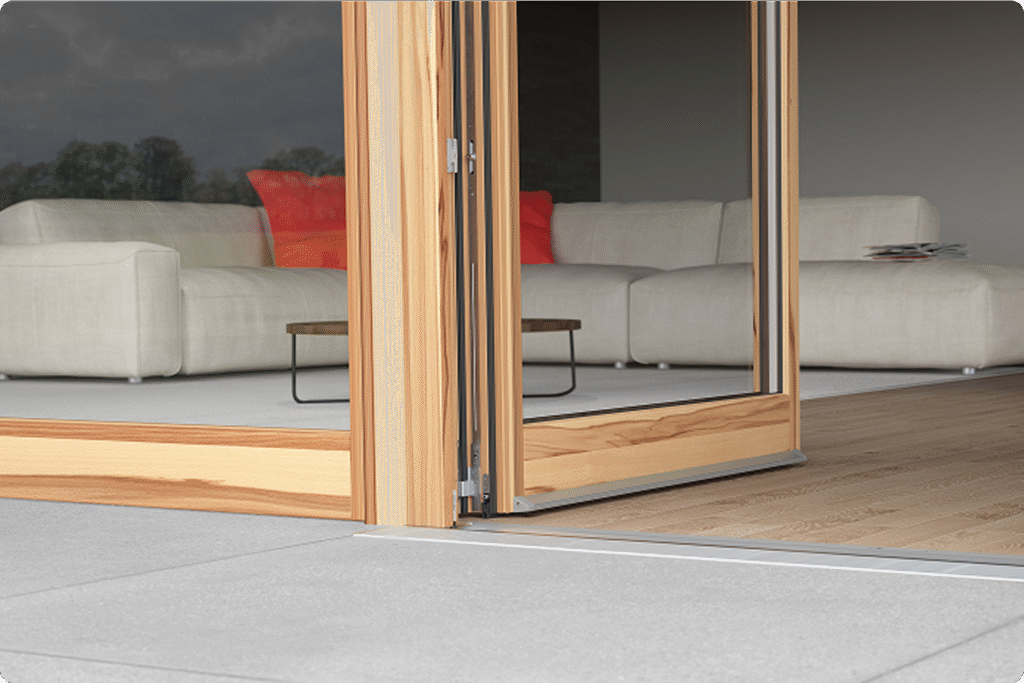
Apparent savings versus real profits
Our observations and analyses show that the difference between the cheapest threshold solution and a sophisticated system such as COMBI can be as high as 30% in total operating costs, even though the list price sometimes differs by only PLN 50 or 70.
Why? Because a well-designed threshold:
- eliminates assembly errors,
- reduces crew working time,
- does not require corrections or additional covers,
- operates in accordance with the declared parameters for many years.
It is precisely its predictability and repeatability that make it profitable – not only at the purchase stage, but above all later on: in service, in use, and in customer reviews.
“It is predictability and repeatability that make it profitable – not only at the purchase stage, but above all later on: in service, in use, and in customer reviews.”
Value is market advantage
For manufacturers, architects, and investors, the value of the COMBI system is more than just a description in the specifications. It is:
- easier compliance with WT2021 and guidelines for accessible construction,
- simplicity of documentation and faster CE marking,
- better product specifications – which really stand out on the market,
- Fewer complaints = greater trust, lower service costs, and more referrals.
And for the end user? Thermal comfort, a quiet and airtight threshold area, no barriers, and peace of mind for many years. In short: it is a technology that works because it has been well thought out.
Conclusion?
Choosing a door threshold is not just a budget decision. It is a choice that affects the entire product life cycle—from installation to use to service.
A “cheaper” solution often turns out to be more expensive—because it generates complaints, certification issues, and additional work.
Therefore, instead of just looking at the amount on the invoice, it is worth asking yourself: does this solution really work to my advantage—today and in the future?